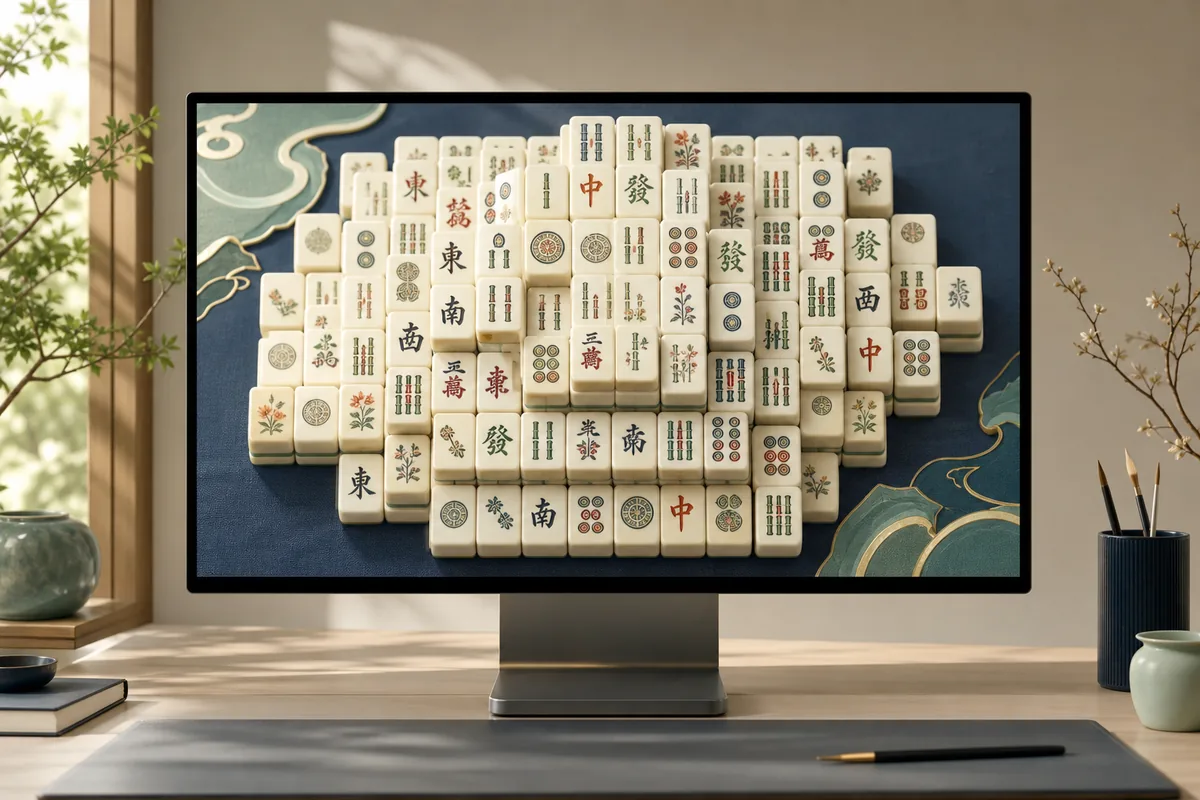
What full screen should improve
The main benefit is spatial clarity. With fewer surrounding panels, a Turtle or Pyramid layout can use larger tiles while retaining its overall shape. Layer offsets become easier to see, similar faces are simpler to compare, and controls can be separated from the active board rather than floating over selectable pieces.
A larger view should not stretch low-resolution artwork or move essential status information off screen. Responsive sizing needs sensible limits, and the board should remain centred when browser bars appear or disappear on a phone.
Entering and leaving safely
Browsers normally require a user action before entering full screen. A clearly labelled button should request it, while Escape and an on-screen Exit control should return the page to normal. Keyboard focus must remain visible, and assistive technology should receive an understandable status update when the display mode changes.
Some mobile browsers do not expose identical full-screen behaviour. A focused in-page mode can still hide nonessential panels and maximise the board without making false promises. The experience should degrade gracefully rather than blocking play on unsupported devices.
Use the extra space for analysis
Begin with a complete board scan. Follow the outer contour, identify the highest tiles, then compare repeated faces across distant sections. Extra width makes it easier to see that two identical pieces sit at opposite row ends or that a third copy remains buried under a tower.
Full screen is a presentation choice, not a different ruleset. A tile still needs an uncovered top and one accessible long side. Keep that rule central and use the cleaner view to choose pairs that expose valuable positions rather than simply clearing the nearest match.
Before entering the mode, note where the timer, remaining-tile count, and assistance controls are located. A polished interface keeps those landmarks stable so extra space supports concentration instead of forcing the player to relearn the screen.
Protect the board when changing display modes
Enter full screen from the game control when one is provided, because the browser shortcut may enlarge the entire page rather than the board. Before switching, make one test move or wait for a save indicator so you know whether the current deal survives a resize. A well-designed game keeps the board state intact when orientation or window size changes.
Learn the exit method before hiding browser controls: Escape usually leaves full screen on desktop, while mobile browsers may use a gesture or an on-screen button. If the board traps keyboard focus or removes every visible exit, leave the mode with the browser control and avoid continuing a session that is difficult to navigate safely.
Applied analysis
Full screen without lost context
A focused mode should retain the information that affects decisions: remaining tiles, selected tile, timer status if one exists, and access to undo or exit. Hiding advertising and unrelated navigation is useful; hiding the state of the puzzle is not. Check what happens when the browser window changes size, a mobile address bar reappears, or the Escape key is pressed. The board should reflow without resetting. A mode that enlarges the image but discards state or traps focus creates more friction than the extra screen space solves.
Quick answers
Questions players ask
How do I leave full screen?
Escape usually exits on desktop, and a well-designed game also provides a visible Exit Full Screen control.
Does every mobile browser support it?
No. Support differs, so a good page provides a focused in-page layout as a fallback.