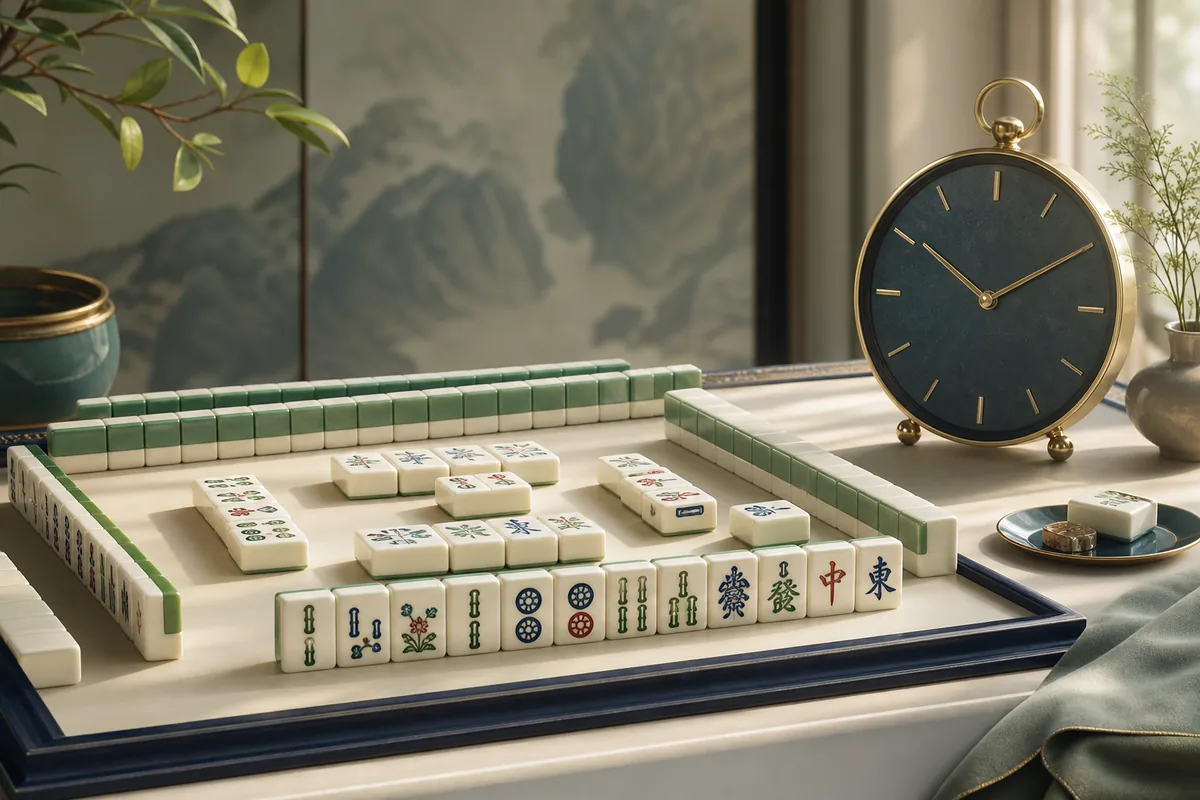
Untimed play reveals the real decisions
Speed can hide weak habits. A player sees a legal pair and removes it before checking the layers beneath. In an untimed session, pause over every candidate and ask three questions: what becomes free, which duplicate faces remain, and whether the move reduces a tall or wide pressure point. That routine turns waiting into analysis rather than hesitation.
The absence of a timer is particularly useful on unfamiliar layouts. A Pyramid concentrates risk in vertical stacks, while a Turtle mixes height with long side rows. Taking time to map those constraints builds a mental model that later supports faster play naturally.
Build a deliberate scan cycle
Start at the highest level, move around the outside edge, then inspect the ends of every long row. Note faces that appear only twice among currently free tiles. After removing a pair, repeat the scan instead of relying on the position you remembered. Two newly open sides can change the best move immediately.
Hints fit an untimed mode when used after a genuine search. Predict the hint first, then compare its suggestion with your own. Undo can test a fork: play one pair, examine the resulting access, and return if it closes more routes than it opens. This is closer to studying a position than correcting random clicks.
Calm does not mean endless
A session still benefits from boundaries. If attention fades, stop after a board or a fixed period rather than forcing the final layers. On return, the same principles apply: preserve options, release buried tiles, and avoid consuming both exposed copies of a face when their twins remain locked together.
Accessibility settings complement untimed play. Larger tile faces, full-screen space, reduced motion, and clear selection states lower visual effort without changing a single rule. The result is a thoughtful puzzle that can be challenging without feeling rushed.
When comparing results, record hints and undos alongside completion rather than treating elapsed time as the only measure. Better recognition and fewer forced reversals show genuine improvement even when a careful board takes longer.
Know when analysis has stopped helping
Untimed play allows careful thought, but repeatedly scanning an unchanged board rarely produces new information. If no move stands out after two full scans, list the legal pairs and compare only three facts: how many tiles each pair uncovers, whether it reduces height or width, and what happens to the remaining duplicate faces. A short comparison is more useful than open-ended staring.
When no legal pairs remain, use undo to return to the last genuine choice rather than replaying the entire board at random. If undo is unavailable, note the symbol that became stranded before restarting. That observation turns a failed deal into a specific lesson for the next attempt.
Applied analysis
Turn extra time into information
An untimed setting is valuable only if the pause changes the decision. Use it to compare candidate pairs, not to stare at one region. Mark the tallest stack, the widest row, and every face with exactly two exposed copies. Then estimate how many new tiles each move releases. If two moves appear equal, prefer the one that leaves partners in separate regions of the board. This method creates a repeatable reason for waiting and prevents an unlimited clock from becoming a session of slow but still impulsive clicking.
Quick answers
Questions players ask
Does removing the timer make every board easier?
It removes time pressure, but the spatial puzzle and risk of blocking pairs remain unchanged.
Is an untimed mode good for strategy practice?
Yes. It gives you time to compare candidate pairs and understand how each removal changes accessibility.